GPT-5.4 is interesting for one boring reason: fewer retries
March 6, 2026
Most model launches are sold the same way. Better benchmark numbers. Better reasoning. Better coding. Better tool use.
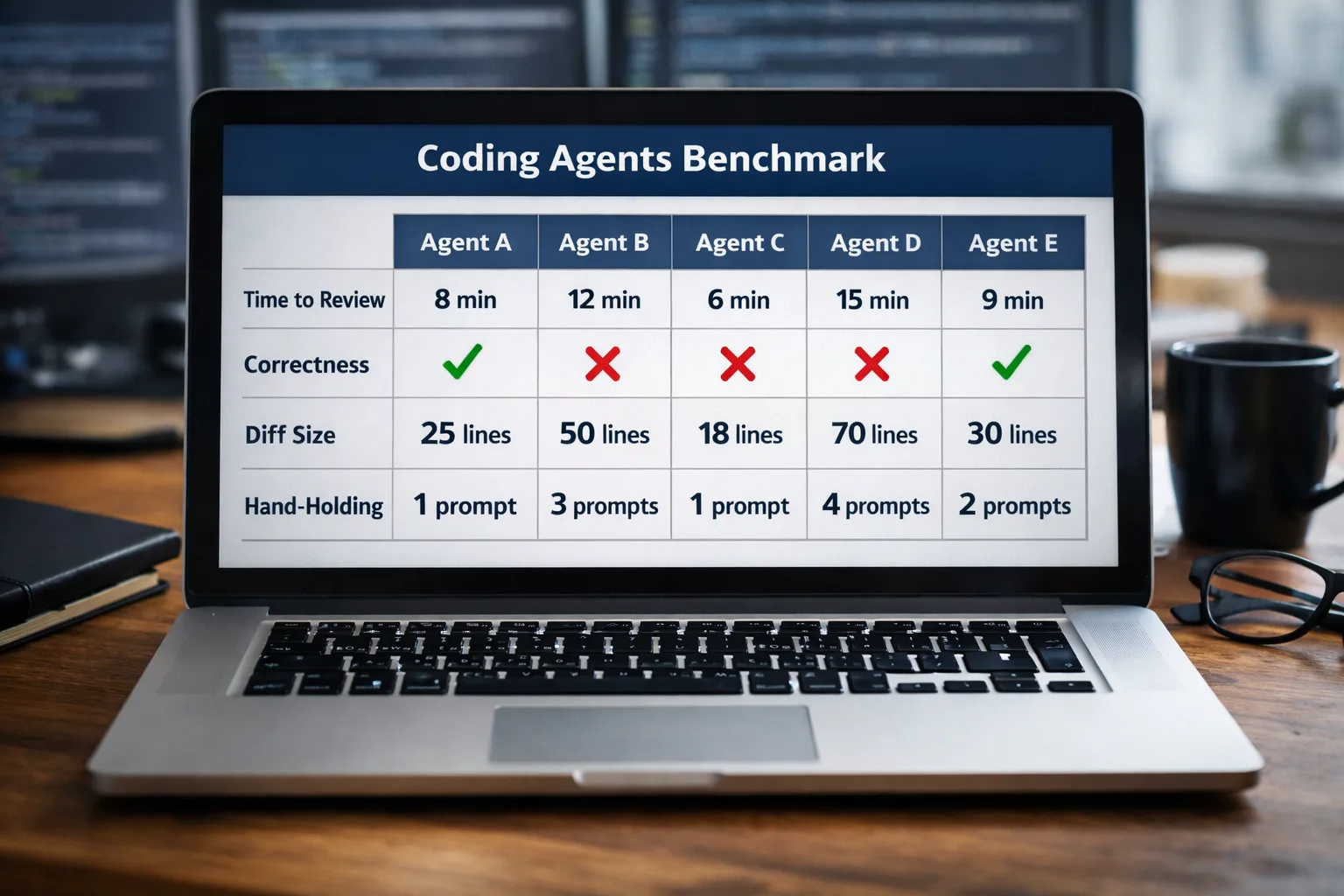
What usually matters in practice is much less glamorous: does it reduce retries?
That is the part of GPT-5.4 that feels more interesting than the usual launch cycle. OpenAI is clearly positioning it as a model for longer work loops, not just single prompt demos. The pitch is not only that it is smarter. The pitch is that it can stay useful across a real sequence of steps: read the repo, inspect the output, call tools, fix the bug, verify the result, and keep going.
For developers and HN readers, that is a much more meaningful claim than another polished benchmark chart.
If GPT-5.4 really does what OpenAI says, the important shift is simple: this is a model aimed at reducing hand holding.
The short version
Here is the practical read on GPT-5.4.
| What changed | Why it matters |
|---|---|
| Native computer use | Better fit for agents that need to interact with software, not just describe what to do |
| 1M context window | More realistic for large repos, long traces, and messy multi-step tasks |
| Better coding plus lower latency | Closer to something you can keep in the loop while actually shipping |
| Tool search | More scalable when your system has lots of tools and connectors |
| Better token efficiency | Potentially lower cost for long tool heavy workflows |
| Better spreadsheet and document work | More useful for real business tasks, not only code generation |
The numbers worth paying attention to
The full launch post has a lot of benchmark material, but only a few numbers feel important enough to keep in your head.
| Capability | GPT-5.4 | Previous reference | Why HN users may care |
|---|---|---|---|
| GDPval | 83.0% | GPT-5.2 at 70.9% | Better performance on actual professional deliverables, not just toy reasoning tasks |
| SWE-Bench Pro public | 57.7% | GPT-5.3-Codex at 56.8% | Slight coding gain, but the more important claim is lower latency |
| OSWorld-Verified | 75.0% | GPT-5.2 at 47.3% | This is the big one if you care about computer operating agents |
| BrowseComp | 82.7% | GPT-5.2 at 65.8% | Better persistent web search on hard to find info |
| Context window | 1,050,000 tokens | Much larger than older defaults | Lets the model keep more code, docs, and task history in play |
| Max output | 128,000 tokens | Large enough for serious generation | More realistic for long reports, migrations, and tool results |
If you want the primary sources, OpenAI published the announcement, the model docs, the GPT-5.4 guide, and the prompt guidance. For ChatGPT specific availability and limits, there is also the help article.
Why this release feels different
What makes GPT-5.4 interesting is not just that a few numbers went up. It is that the product shape looks different.
OpenAI is trying to merge several things that used to feel separate:
- a strong coding model
- a long-running reasoning model
- a model that can use tools without getting lost
- a model that can work across documents, spreadsheets, and presentations
- a model that can directly operate software
That combination matters because most useful AI work is not a single answer. It is a loop.
You ask the model to inspect something. It finds a problem. It calls a tool. It reads a file. It changes code. It checks the output. It fails once. It tries again. It leaves behind a result you might actually use.
That is very different from the old chat centric pattern where the model says something plausible, you paste the next error, and the two of you manually crawl toward a solution.
The feature that deserves the most attention: computer use
For me, the biggest story is not the coding score. It is native computer use.
That is the first part of the launch that feels like a category shift instead of a routine increment. Once a model can work from screenshots, keyboard actions, and mouse actions, the question changes from "can it suggest a workflow?" to "can it survive a workflow?"
That matters for browser tasks, internal tools, QA, dashboards, admin panels, flaky legacy systems, and all the awkward places where clean APIs do not exist or do not help enough.
The computer use jump is also large enough that it does not look cosmetic. If the OSWorld result translates even partially to real use, GPT-5.4 is much more relevant for people building serious agents than earlier general models were.
Coding is still the center of gravity
Even with all the business workflow language around the launch, I think most HN readers will still judge GPT-5.4 on one thing: how it behaves in code.
The raw coding benchmark gain over GPT-5.3-Codex is not huge. On paper it is more like a steady improvement than a blowout. But that undersells what OpenAI is actually claiming here.
The more interesting claim is that GPT-5.4 brings strong coding into a broader model that also does long horizon work, tool use, UI generation, and computer use with lower latency. In other words, OpenAI is not selling a coding specialist alone. It is selling a model that can code and keep context across the rest of the workflow.
That matters more than a narrow benchmark win.
A lot of developer frustration today is not "the model cannot write code." The frustration is that it loses context, over edits, forgets constraints, makes tool choices badly, or collapses halfway through a longer task. If GPT-5.4 reduces those failure modes, that will matter more than a 1 point or 2 point benchmark edge.
Tool search may end up being underrated
One of the least flashy parts of the launch might be one of the most useful.
OpenAI says GPT-5.4 adds tool search in the API, which lets the model load the relevant tool definitions only when needed instead of dragging every tool into context up front. On OpenAI's example using MCP Atlas tasks, that reduced total token usage by 47% while keeping the same accuracy.
That is a big deal if you are building anything with lots of tools, connectors, or MCP servers.
Most agent systems get uglier as the tool count grows. Prompts get noisy. Cost drifts up. Selection quality gets weird. Caches break more often. If tool search works well in practice, it could be one of the most operationally useful parts of GPT-5.4 for teams building real systems.
It is not the kind of feature that gets a flashy demo. It is the kind of feature that quietly makes a production system less annoying.
The hidden quality of life improvement: fewer false turns
Another detail worth noticing is that OpenAI says GPT-5.4 is its most factual model yet, with individual claims 33% less likely to be false and full responses 18% less likely to contain any errors compared with GPT-5.2.
That may not sound dramatic next to agent benchmarks, but it is actually one of the most practical improvements in the whole launch.
A lot of wasted time with models comes from false confidence. Not full catastrophic failure. Just small wrong assumptions that force you to rewind later. Wrong file path. Wrong dependency. Wrong spreadsheet interpretation. Wrong explanation given in a very confident tone.
If GPT-5.4 simply makes fewer of those mistakes, it becomes easier to trust in the middle of a workflow, which is exactly where most people lose patience with AI tools.
What I would actually test before switching
If you are deciding whether GPT-5.4 matters for your work, I would ignore most launch hype and run four simple tests.
1. The repo test
Give it a medium sized real repository, ask for a multi file change, and see whether it preserves patterns, avoids unnecessary edits, and finishes the change with fewer corrective prompts.
2. The broken UI test
Give it a real front end bug with screenshots, styling issues, and one or two hidden constraints. See whether it can inspect, patch, verify, and avoid making the page worse.
3. The tool overload test
Put it behind a messy tool environment with many options and overlapping capabilities. See whether it selects tools intelligently without bloating tokens or wandering.
4. The long task memory test
Give it a task that normally breaks weaker models after several iterations. A migration, a spreadsheet analysis, a long presentation draft, or an automation flow is ideal. The question is not whether it starts strong. The question is whether it stays coherent.
If GPT-5.4 wins those four tests, then the launch is meaningful.
Where I am still skeptical
There are still good reasons to be cautious.
First, launch benchmarks are launch benchmarks. Real workflows are messy, and the hardest part is usually not the first step. It is the fifth correction after the second tool call in a stateful environment.
Second, a larger context window is useful, but it does not magically solve prompt sprawl or noisy inputs. Bigger context helps only if the model is also good at keeping the important parts active.
Third, the cost picture depends on your workload. GPT-5.4 may use fewer tokens than GPT-5.2 on some reasoning tasks, but it is still a premium model, and the economics will look very different depending on how much tool use, search, or computer use you attach to it.
So I would read the launch as promising, not settled.
ChatGPT, API, and Codex: what this means in practice
The release is also interesting because OpenAI is trying to align the model story across surfaces.
In the API, gpt-5.4 is the default flagship for important general work and coding. In Codex, it replaces GPT-5.3-Codex as the default recommendation. In ChatGPT, paid users can manually select GPT-5.4 Thinking, while higher tiers also get GPT-5.4 Pro for harder tasks.
That consistency matters. One of the annoying parts of recent model ecosystems has been fragmentation. A good coding model here, a better reasoning model there, a different tool behavior somewhere else. GPT-5.4 looks like an attempt to simplify that.
For normal users, that means fewer mental model switches.
For teams, it means fewer "which model do we use for this stage?" debates.
The real story
The most important thing about GPT-5.4 is not that it looks more impressive in a benchmark chart.
It is that OpenAI seems to be optimizing around something much more boring and much more useful: less back and forth.
That is what people actually want. Fewer retries. Fewer corrections. Fewer moments where the model derails right when the task gets real.
If GPT-5.4 delivers on that, then this is not just another model launch. It is a step toward AI that behaves less like a smart demo and more like software you can keep in the loop while doing real work.
That is a much better reason to care.